A solidarity event in support of the Seoul International People’s Tribunal on the 1945 U.S. Atomic Bombings was held at John Jay College in New York on October 29, 2026.
Organized by local supporters, the event brought together approximately 15–20 students and faculty members for a screening of The Other Hiroshima: Song of Arirang, a documentary by Korean filmmaker Park Soonam.
The film explores the experiences of Korean atomic bomb victims living in Japan, drawing on testimonies collected by Park. Through their accounts of the atomic bombings, postwar life, and experiences under Japanese colonial rule, the documentary sheds light on the historical and political dimensions of the suffering of Korean victims, including the violence of colonialism and its impact on identity and cultural belonging.
Following the screening, participants wrote postcards expressing their solidarity and support for the atomic bomb victims. The organizers hope to deliver these messages to the victims, either during the November Tribunal in Seoul or when they visit New York for the First Meeting of States Parties to the Treaty on the Prohibition of Nuclear Weapons (TPNW) Review Conference in late November.
The event was a meaningful opportunity to deepen awareness of the experiences of Korean atomic bomb victims and strengthen solidarity across borders and generations.
The Tribunal Organizing Committee sincerely appreciates the organizers and all participants for their interest, support, and solidarity.
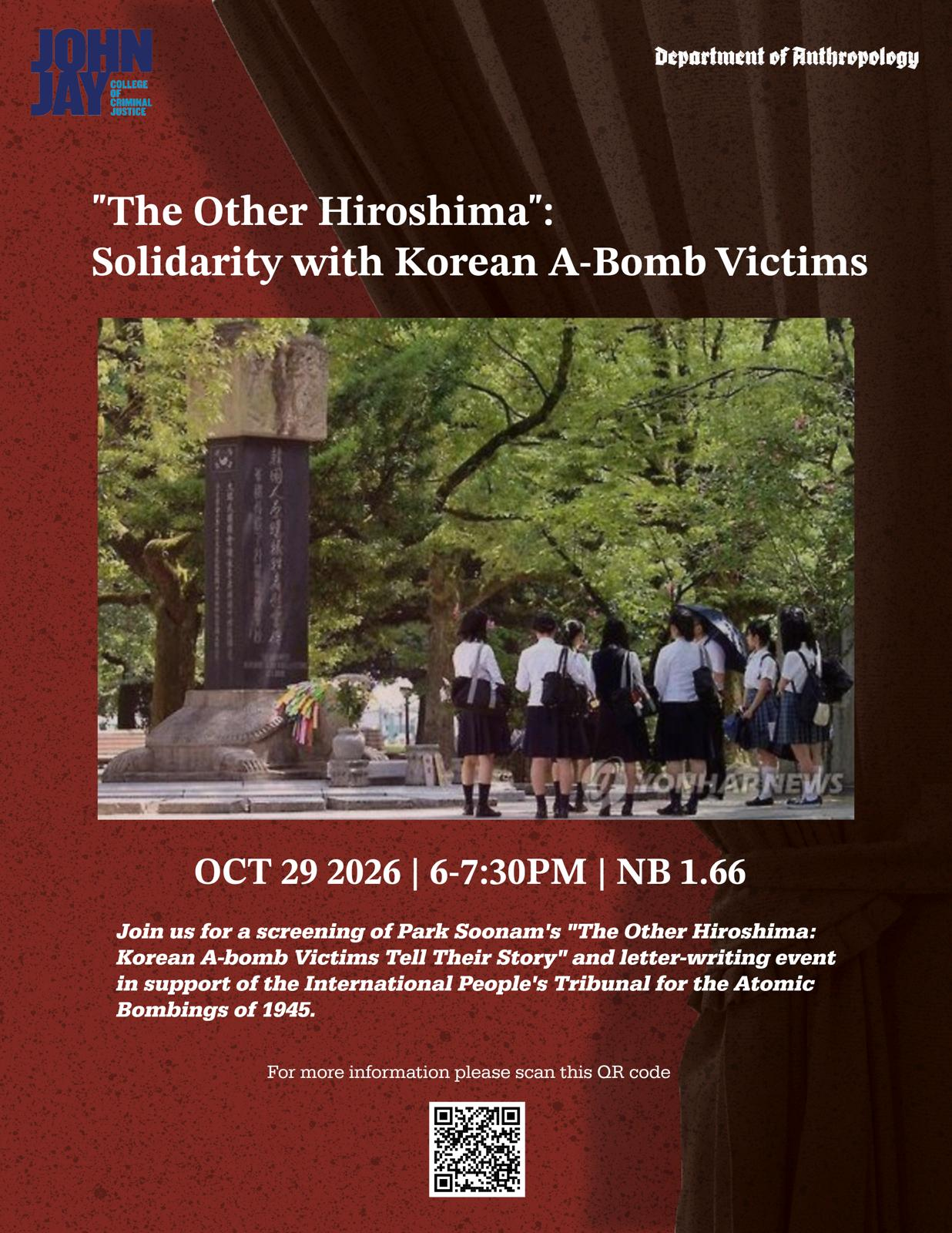



A solidarity event in support of the Seoul International People’s Tribunal on the 1945 U.S. Atomic Bombings was held at John Jay College in New York on October 29, 2026.
Organized by local supporters, the event brought together approximately 15–20 students and faculty members for a screening of The Other Hiroshima: Song of Arirang, a documentary by Korean filmmaker Park Soonam.
The film explores the experiences of Korean atomic bomb victims living in Japan, drawing on testimonies collected by Park. Through their accounts of the atomic bombings, postwar life, and experiences under Japanese colonial rule, the documentary sheds light on the historical and political dimensions of the suffering of Korean victims, including the violence of colonialism and its impact on identity and cultural belonging.
Following the screening, participants wrote postcards expressing their solidarity and support for the atomic bomb victims. The organizers hope to deliver these messages to the victims, either during the November Tribunal in Seoul or when they visit New York for the First Meeting of States Parties to the Treaty on the Prohibition of Nuclear Weapons (TPNW) Review Conference in late November.
The event was a meaningful opportunity to deepen awareness of the experiences of Korean atomic bomb victims and strengthen solidarity across borders and generations.
The Tribunal Organizing Committee sincerely appreciates the organizers and all participants for their interest, support, and solidarity.