


Oral Hearing Schedule for the Seoul International People’s Tribunal
Korea Standard Time (KST)




DAY 1 — Friday, November 13│ Hearing on the Facts
08:30am│ Registration and Admission
09:00am│ Welcome and Opening Remarks
Welcome remarks will be delivered by the Co-Chairs of the Organizing Committee of the Seoul International People’s Tribunal and the Organizer, followed by an introduction of international partners and participants.
09:20 am │ Convening of the Tribunal and Opening of the Oral Hearings
Opening Remarks by the Presiding Judge
The Presiding Judge will introduce the nature and purpose of the Seoul International People’s Tribunal and emphasize the significance of a people’s tribunal in establishing facts and responsibility and realizing justice through legal examination. The remarks will also present a way forward beyond the past harms caused by the atomic bombings, toward preventing any recurrence of the use of nuclear weapons, advancing nuclear disarmament, and realizing a world free of nuclear weapons.
—
Panel of Judges
⦁ Presiding Judge: Richard A. Falk (USA, Professor Emeritus of International Law, Princeton University)
⦁ Marjorie Cohn (USA, Professor Emerita, Thomas Jefferson School of Law)
⦁ Lee Suk-tae (Republic of Korea, Former Justice of the Constitutional Court of Korea)
⦁ Katherine Gallagher (USA, Senior Staff Attorney, Center for Constitutional Rights)
09:50am │ Opening Statements
⦁ Opening Statement and Summary of Claims by Counsel for the Plaintiffs: Attorney Park Gyu Hoon
⦁ Opening Statement by Counsel for the Respondent (if absent, a summary of its position will be read into the record)
⦁ Statement by the Government of the Republic of Korea (Non-Party) (omitted if absent)
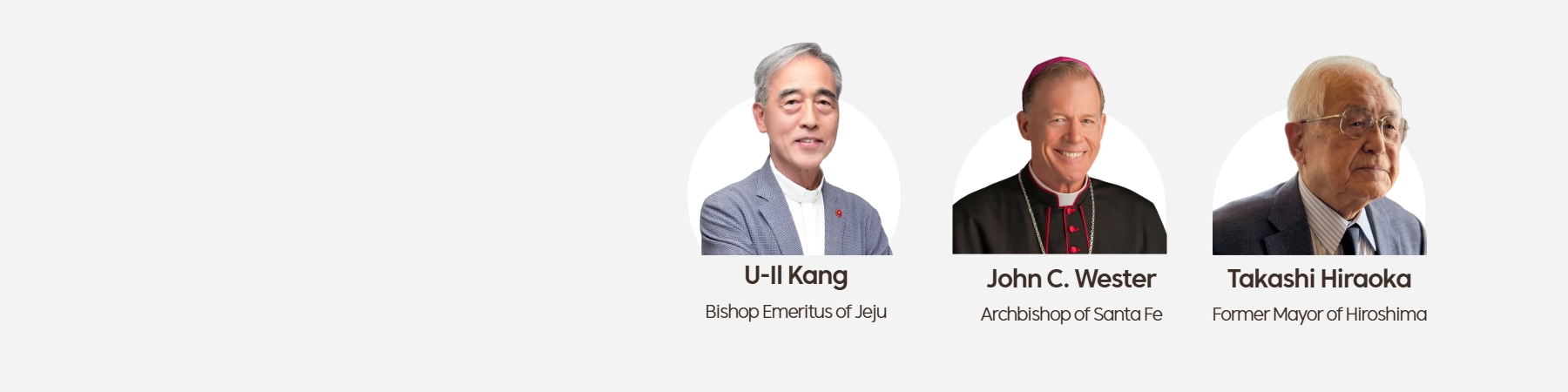
10:20am │ Expert Testimony — The Social, Political, and Military Significance of the Atomic Bombings and the Present Nuclear Confrontation on the Korean Peninsula
The principal issues addressed will be the history of Korean atomic bomb victims, the political and military significance of the 1945 atomic bombings, and the nuclear confrontation on the Korean Peninsula. Through the testimony of the three experts, the Tribunal will comprehensively examine the social, political, and historical facts surrounding the suffering of Korean atomic bomb victims and the present nuclear confrontation on the Korean Peninsula, and identify the conditions necessary to prevent any recurrence of the use of nuclear weapons.
—
Testifiers
⦁ Eunjeong Oh (Assistant Professor of Anthropology, Seoul National University)
⦁ Samsung Lee (Professor Emeritus of Political Science and Public Administration, Hallym University)
⦁ Ward Hayes Wilson (Executive Director, RealistRevolt; author of Five Myths About Nuclear Weapons)
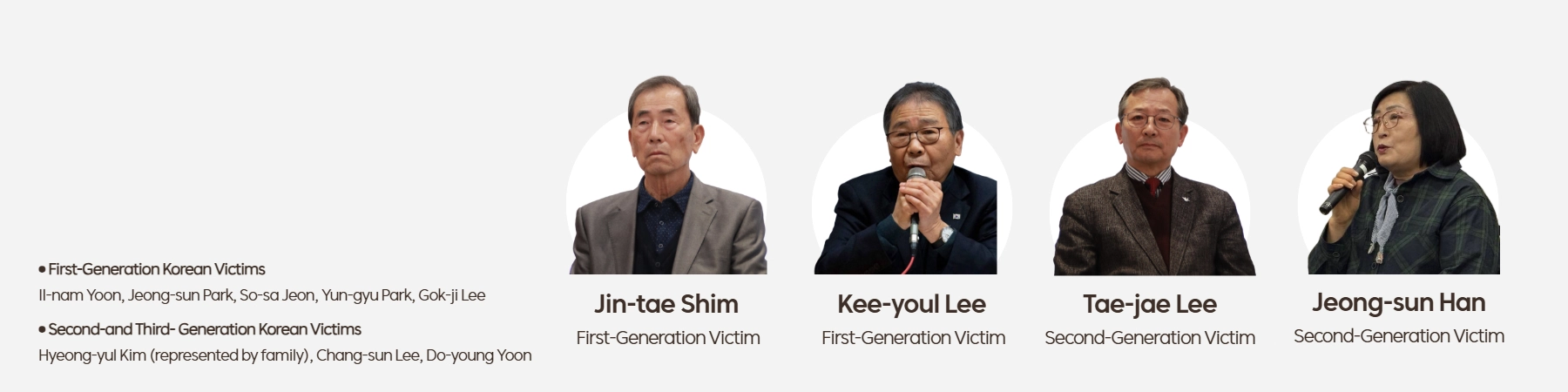
11:45am│Testimony of First and Second-Generation Korean Atomic Bomb Victim Plaintiffs
Through the testimony of first-, second-, and third-generation Korean atomic bomb victim plaintiffs, the Tribunal will demonstrate that the harm caused by the atomic bombings in 1945 is by no means an event confined to the past, but has continued for 81 years. The continuing reality of nuclear harm across generations will also reveal the long-term and intergenerational consequences left by the use of nuclear weapons and the question of responsibility for those consequences.
—
⦁ Testimony of First-Generation Korean Victims: Jeong-sun Park, So-sa Jeon, Yun-gyu Park, Jin-tae Shim, Kee-youl Lee
⦁ Testimony of Second-Generation Korean Victims: Hyeong-yul Kim (represented by family), Jeong-sun Han
12:30pm│ Questions from the Panel of Judges
13:00pm│ Lunch
DAY 2 — Saturday, November 14│Hearing on Illegality
08:30am│ Registration and Admission
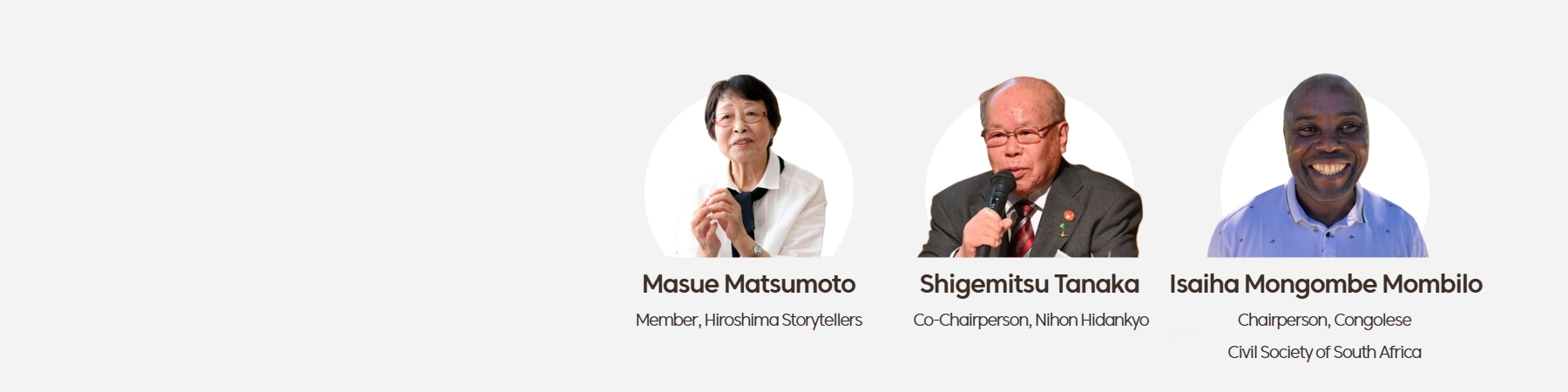
09:00am │ Testimonies of Victims of Nuclear Weapons Development, Testing, and Use, and Reflections by Civil Society
Through the testimonies of those harmed by the development, testing, and use of nuclear weapons, the Tribunal will examine the harm caused by nuclear weapons and the responsibility arising from that harm, and demonstrate that nuclear weapons must be prohibited also as a means of realizing the rights of victims and achieving justice.
—
Victims of Nuclear Weapons Use
⦁ Masue Matsumoto (Hiroshima atomic bomb survivor; Member, Hiroshima Storytellers)
⦁ Shigemitsu Tanaka (Nagasaki atomic bomb survivor; Co-Chairperson, Japan Confederation of A- and H-Bomb Sufferers Organizations [Nihon Hidankyo])
—
Testimony on Harm from Nuclear Weapons Development
⦁ Isaiha Mongombe Mombilo (Chairperson, Congolese Civil Society of South Africa [CCSSA])
—
Victims of Nuclear Testing
⦁ Benetick Kabua Maddison (Third-generation victim of nuclear testing in the Marshall Islands; Executive Director, Marshallese Educational Initiative)
⦁ Mary Dickson (Utah downwinder and victim of nuclear-test fallout; writer, journalist, and nuclear justice activist)
—
Reflections on Victim Testimonies
⦁ Ann Wright (Advisory Board Member, Veterans For Peace [VFP]; Former U.S. State Department Official)
⦁ Melissa Parke (Executive Director, International Campaign to Abolish Nuclear Weapons [ICAN])
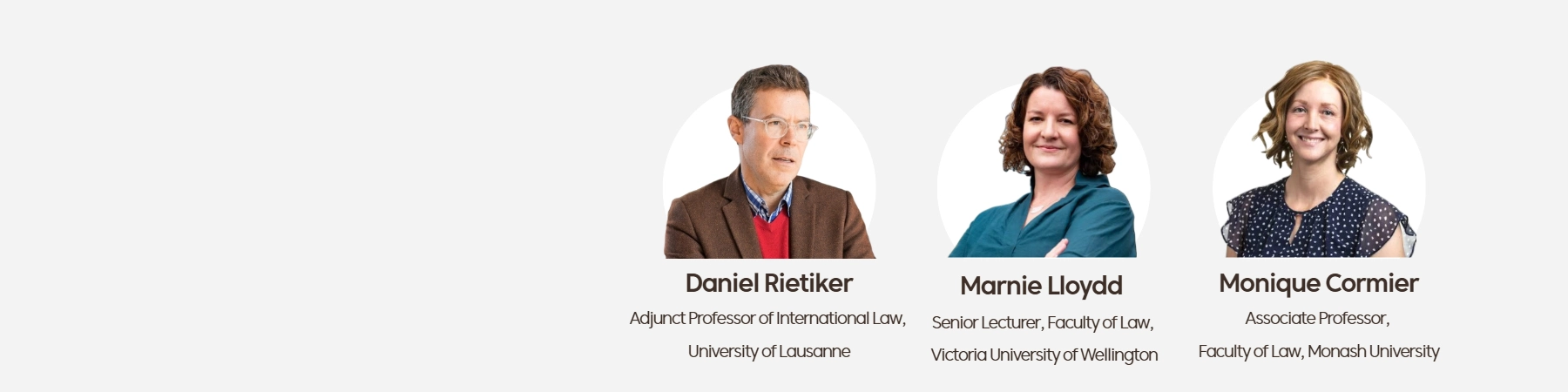
10:20am│Statements by the Legal Review Team and Experts — The Illegality of the 1945 Atomic Bombings and the Use of Nuclear Weapons Today
The illegality of the atomic bombings will be examined in light of international law as it stood in 1945 and international law today. The Legal Review Team and experts will examine the illegality of the atomic bombings, focusing on the prohibition against attacks on civilian populations, the Martens Clause, the prohibition against unnecessary suffering, the prohibition of chemical weapons, and the principles of necessity and proportionality. They will also examine the illegality of the use of nuclear weapons from the perspectives of international humanitarian law (IHL), environmental law, international human rights law, and the Treaty on the Prohibition of Nuclear Weapons (TPNW).
—
Statements by the Legal Review Team and Experts
⦁ Daniel Rietiker (Adjunct Professor of International Law, University of Lausanne)
⦁ Marnie Lloydd (Senior Lecturer, Faculty of Law, Victoria University of Wellington)
⦁ Monique Cormier (Associate Professor, Faculty of Law, Monash University)
10:45am│Statements by the Amicus Curiae Statement
Independent legal review by the amicus curiae, the Tribunal will consider counterarguments concerning the legality of the atomic bombings, thereby comprehensively examining the legal issues concerning the legality of the atomic bombings and responsibility arising from them.
—
Amicus Curiae Statement
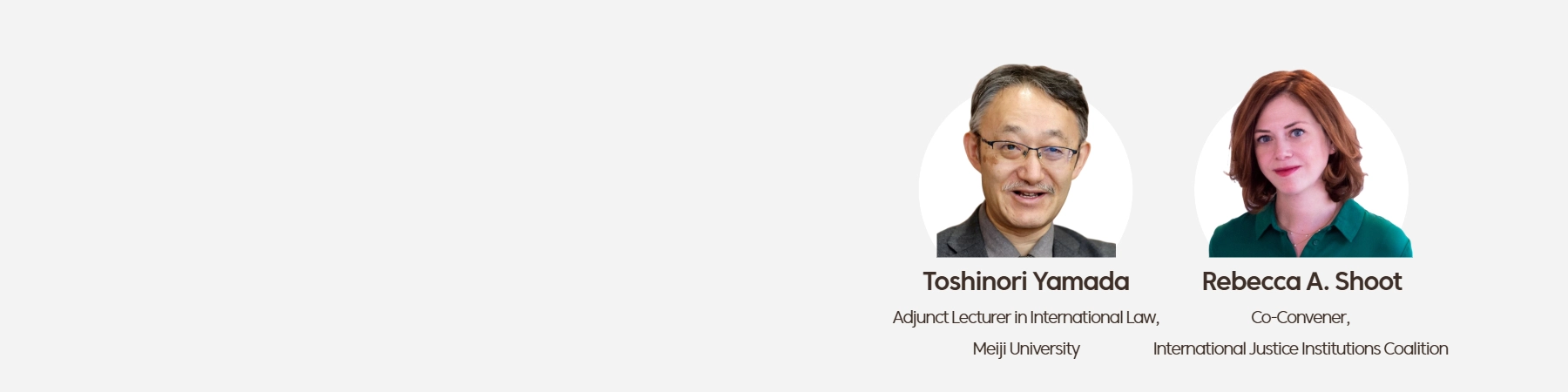
⦁ Toshinori Yamada (Adjunct Lecturer in International Law, Meiji University)
• Okubo Ken-ichi (President of Japan Association of Lawyer Against Nuclear Arms, JALANA)
• Bontae Choi (Chairman of the Committee on Human Right for Victims of Japanese colonial of the Korean Bar Association)
12:25pm│Expert Testimony—The Illegality of Extended Nuclear Deterrence
This session will address the illegality of extended deterrence policies that are currently intensifying the nuclear crisis on the Korean Peninsula and in Northeast Asia. It will present the legal and political tasks necessary to end extended deterrence premised on the use of nuclear weapons and the resulting threats of nuclear use—including the conclusion of a peace treaty, the establishment of a US-DPRK non-aggression pact, and nuclear disarmament obligations under Article VI of the NPT—to advance the denuclearization of the Korean Peninsula and the realization of a world free of nuclear weapons.
—
Testifiers
⦁ Rebecca A. Shoot (Attorney; Co-Convener, International Justice Institutions Coalition [ImPact])
• Youngdae Ko (Permanent Researcher of Research Institute For Peace and Reunification of Korea)
13:05pm│ Questions from the Panel of Judges
13:20pm│ Lunch
DAY 3 — Sunday, November 15│State Responsibility, Preliminary Judgment and Recommendations
08:30am│ Registration and Admission
09:00am│ Expert Testimony—Establishing U.S. State Responsibility and the Case for Apology, Compensation, and Guarantees of Non-Repetition
This session will examine the historical and international legal background and processes that led to the mobilization of Koreans to mainland Japan and the resulting suffering of Korean atomic bomb victims. It will also examine the international legal status of Korea under Japanese rule, as well as the international legal character and illegality of Japan’s rule over Korea and its wartime mobilization, from the perspectives of the law of occupation and the law of neutrality.
—
Testifiers
⦁ Michael R. Jin (Associate Professor of Global Asian Studies and History, University of Illinois Chicago [UIC])
⦁ Etsuro Totsuka (Attorney-at-Law; Former Professor, Faculty of Law, Ryukoku University)
—
This session will examine the gaps and double standards in international law that emerged when the wartime conduct of the victorious powers was excluded from adjudication in the post-World War II war crimes trials. In light of the Nuremberg Charter and Principles, it will address the criminality of the 1945 atomic bombings and the resulting state responsibility of the United States.
—
Testifiers
⦁ Eric Ross (Ph.D. Candidate in History, University of Massachusetts Amherst)
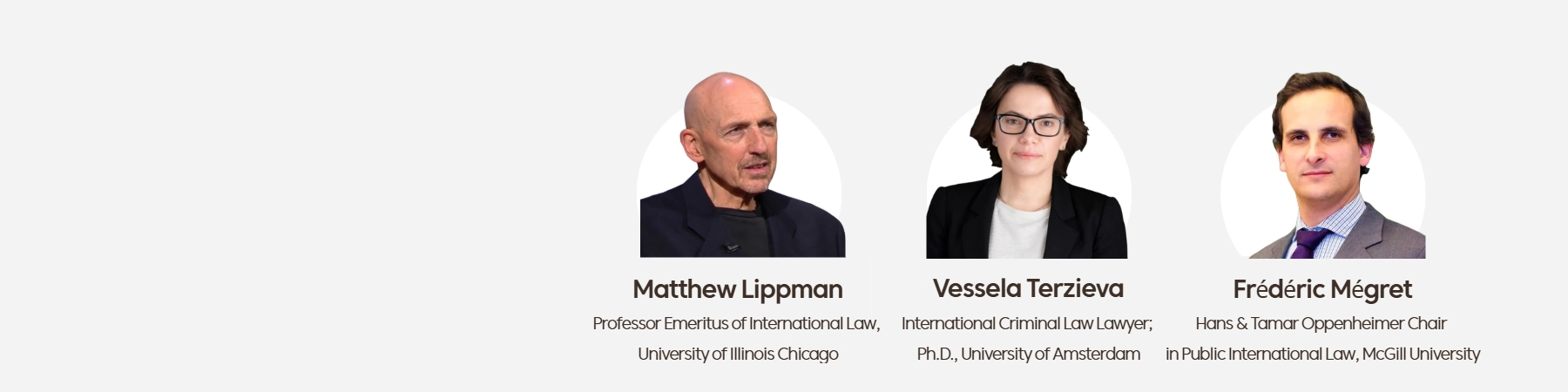
⦁ Matthew Lippman (Professor Emeritus of International Law, University of Illinois Chicago [UIC])
10:40am │ Expert Testimony—Establishing U.S. State Responsibility and the Case for Apology, Compensation, and Guarantees of Non-Repetition
Based on international law, including Article 3 of the 1907 Hague Convention IV, this session will address the restoration of victims’ rights arising from state responsibility and the obligations of the U.S. Government to provide an apology and compensation. It will also explain the international legal regime governing nuclear weapons and its limitations, and examine the legal barriers likely to arise in litigation seeking remedies for Korean atomic bomb victims and the challenges involved in overcoming them.
—
Testifiers
⦁ Vessela Terzieva (International Criminal Law Lawyer; Ph.D., University of Amsterdam)
⦁ Frédéric Mégret (Hans & Tamar Oppenheimer Chair in Public International Law, McGill University)
11:10am │ Closing Arguments
⦁ Closing Argument by Counsel for the Plaintiffs: Attorney Park Gyu Hoon
⦁ Closing Argument by Counsel for the Respondent (in the event of non-appearance, arguments that the Respondent could be expected to raise will be presented on its behalf)
11:40am │ Questions from the Panel of Judges
The written submissions, testimonies, and evidence will be considered together to provide a final presentation of the legal grounds and basis of the claims. If the Respondent does not appear, the principal defenses and counterarguments that could be raised by the United States will be presented on its behalf. Following the closing arguments, the Panel of Judges will pose questions and clarify the principal issues before the Tribunal.
12:00pm│ Declaration of the Conclusion of Arguments by the Presiding Judge and Private Deliberation
13:00pm │ Preliminary Judgment and Recommendations
In private deliberation, the Panel of Judges will consider the evidence submitted, the arguments of both sides, and the expert testimony in reaching its determinations on each issue raised by the claims and on the legal responsibility of the United States. Based on the outcome of the deliberation, the Presiding Judge will deliver the Preliminary Judgment and Recommendations.
Closing of the Hearing & Symbolic Concluding Ceremony: Ganggangsullae
Related Programs
Thursday, November 12 — Welcome Event for Guests
• Afternoon │ Brief Rehearsal
• Afternoon │ Welcome Event
Friday, November 13 — Dramatic Reading on Second-Generation Korean Atomic Bomb Victims and Visit to Historical Sites
⦁ 14:30pm │ Dramatic Reading on Second-Generation Korean Atomic Bomb Victims
A dramatic reading portraying the lives and struggles of second-generation Korean atomic bomb victims will be presented. Through the lives and voices of the victims, the performance will convey how the harm caused by the atomic bombings did not end with one generation but has continued into the lives of subsequent generations.
—
⦁ Arts & Performance
—
⦁ 15:30pm │ Visit to Historical Sites
Participants will visit sites of modern and contemporary historical significance in the Suyu-dong area, tracing Korean society’s journey toward national independence, democracy, peace, and reunification. By encountering the historical footsteps of the people in their pursuit of self-determination, participants will connect this history with the issues and concerns addressed by today’s Seoul People’s Tribunal.
—
⦁ Evening │Special Program
Short Video Presentation
Informal Dialogue
Saturday, November 14 — Dialogue with Nuclear Victims and Experts
⦁ 14:40pm │ Dialogue with People Affected by Nuclear Weapons Development, Testing, and Use
The dialogue will address issues of harm and responsibility that could not be fully explored during the oral hearings. Participants will examine the historical and continuing connections between nuclear weapons, imperialism, and colonialism. They will also discuss the role of affected people in realizing a nuclear-weapon-free Korean Peninsula and world in order to prevent further generations of nuclear harm.
—
⦁ Arts & Performance
—
⦁ 15:50 pm │ Expert Dialogue
Experts will discuss key issues concerning international law and nuclear weapons, including the illegality of the 1945 atomic bombings, state responsibility, remedies for victims, legal barriers, and ways to overcome them. The dialogue will also explore ways to build solidarity and cooperation among Korea, the United States, and Japan to overcome the legacy of injustice left by the atomic bombings. Furthermore, it will seek paths to advance from the denuclearization of the Korean Peninsula to a nuclear-free Northeast Asia and a nuclear-free world—ending extended deterrence, concluding a peace treaty and a US-DPRK non-aggression pact, and fulfilling complete nuclear disarmament obligations under Article VI of the NPT—while discussing the roles and tasks of civil society to achieve these goals.
—
⦁ Evening │Special Program
Short Video Presentation
Informal Dialogue
Sunday, November 15 — Follow-up Planning Roundtable
⦁ 14:40pm │ Follow-up to the Oral Hearings: Toward the Final Judgment, Litigation, and Legal Action
Researchers and experts, atomic bomb victims, SPARK as the Organizer, members of the International Organizing Committee, and representatives of partner organizations will participate in the roundtable to share and discuss follow-up actions and avenues for international solidarity based on the Preliminary Judgment and Recommendations of the Seoul People’s Tribunal.